Book 4: Grace
Chapter 12: Life with Sam and Martha
The beginnings of my life are not very clear. Most of us don’t remember the first 3-4 years of our lives, and I am much the same. My earliest memory is walking with my older sister, Carrie, to church on a cold January morning. We got so cold that I thought my nose might fall off, but we made it there in one piece.
For the first ten years of my life, I believed that my father was Samuel Perkins Brand; my mother was Martha Hatch Brand; and my older sister — three years older than me — was Caroline Martha Elizabeth “Effie” Brand. We sometimes called her Effie, but as she grew up, we called her Carrie most of the time. According to Samuel and Martha, and according to my birth certificate, I was born in Waseca, Minnesota, in late August of 1879. After I learned that Sarah Etta was actually my mother, I was never sure if my birth date or my birthplace was accurate. My family did a great deal to make sure that no one knew that I was not Sam and Martha’s daughter.
I called Samuel and Martha “mother” and “father” for those first ten years of my life. Once I got to Kansas City, Aunt Julia and Grandma Brand told me that Samuel and Martha were my aunt and uncle and Carrie was my cousin. My mother was actually Sarah Etta Brand, who had become quite wealthy in Kansas City working as a woman of the night. This was difficult for a 10-year-old to learn about and accept. It changed my life forever.
Samuel was my grandmother’s first-born. He had arrived on November 13, 1849, back in West Turin, New York, where my grandparents had lived when they were young. By the time he was 11 years old, he had several siblings, including Sarah Etta, my mother. After the terrible ordeal of Great-Aunt Clarinda’s situation, my grandparents and their children moved from West Turin to Richland, Rice County, Minnesota. Samuel, about age 15, went with them.
Eight years later — on 1 January 1874 — he married Martha Hatch. He had met Martha in Rice County. He was 24 and Martha was just 19. At a fairly early age, I realized that Samuel was often highly nervous and afraid of many things. This created some problems for those of us under his care. He would worry if we left the house and insist that we remain at home at all times. I was never really certain just why he had developed this personality trait, but he could be difficult sometimes to live with. I figured out what might have been the root of his problem once I became a nurse and even nursed him for a while. He was 7 when Great-Aunt Clarinda murdered her husband. He followed the trial and knew what happened to her. He listened to his mother fret about what had happened to her sister, and he was bullied by kids at the school because his aunt was a murderer. Moving to Minnesota undoubtedly helped him a lot, but these things had happened to him when he was very young and the illness developed early as a result.
Martha was kind and generous and I got along well with Carrie, who I considered to be my older sister. We did a lot of things together and I never really forgot the kindness she gave to me in those years that I lived with her and her parents. My younger cousins, Fred and Pansy, born in 1881 and 1888 respectively, added to the family, and until I left in 1890, I considered them my siblings. Alline, Harvey, and Stanley were all born after I left and I never got to know them at all.
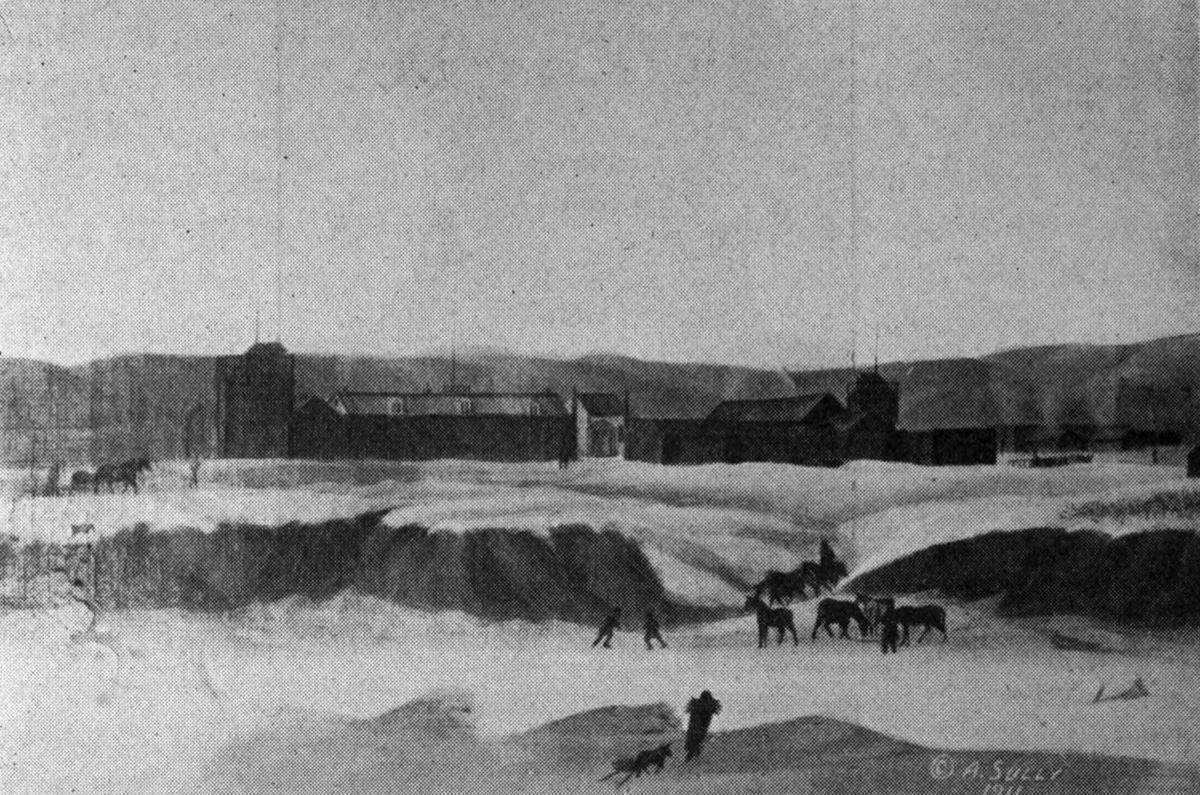
Samuel always had difficulty holding down a job, but he was a fairly talented carpenter (perhaps inherited from his father) and he sometimes farmed as well. He liked living in quiet, secluded areas — no big cities for Samuel! However, in 1888 we moved to Pierre, South Dakota, and he was listed in the city directory as a carpenter. Pierre was founded just eight years before we got there on the east bank of the Missouri River. Across the river had been a fort also called Fort Pierre, which had been a trading post. But the town developed on the other side of the river and in 1889 it became the capital city of the state, partly because it was centrally located.
The winters were cold in Pierre and I remember some very cold walks to school. One day I came home to learn that Grandma Brand had sent a telegram to Samuel and Martha, telling them that there was a problem with Sarah Etta’s will and I had to come to Kansas City immediately. I remember Martha crying and being very upset about this, and I was just lost and confused and didn’t know what any of it meant. It was very hard for me to say good-bye to Samuel and Martha, as well as Carrie.
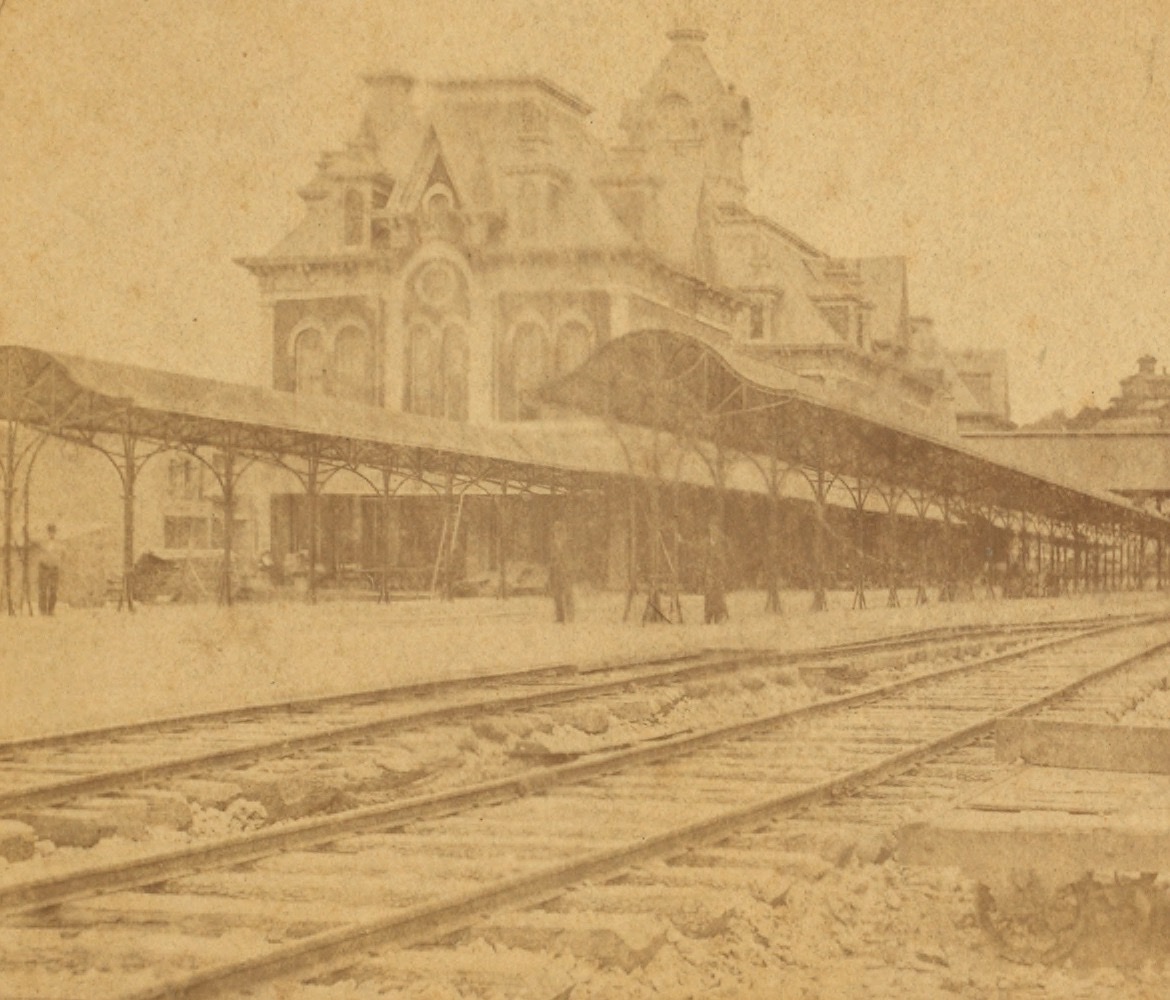
Martha and I took the train from Pierre to Waseca (the same route we had followed when we first moved to Pierre), and my Aunt Julia met us in Waseca. I said good-bye to Martha — both of us crying the whole time. Aunt Julia was kind and understanding and held my hand and did everything she could to make me feel wanted and safe. But the trip was almost overwhelming. We arrived at the Union Depot in Kansas City, and Grandma Brand was there to meet us. My memories of that day are mixed with the sights and smells of Kansas City. It seemed big, ugly, dirty, and overwhelming. I know I cried myself to sleep that night … and for many nights afterwards.
Author’s Note: The women in Sisters were real people, and I have told their story as accurately as I can for lives lived in the 19th century. I can prove and support many of the facts with records from the time. But no record can tell me exactly what someone said, and for some events I know only portions of the story. So I have also had to use my imagination, to put you, the reader, inside the head of each woman as she tells her own story.