Book 1: Sarah Etta
Chapter 1: Aunt Clarinda
My mother and my Aunt Clarinda were both beautiful women: dark hair and eyes, clear complexions, and statuesque figures. I know that men’s heads turned when my mother walked down the street, and I don’t think it was much different for my aunt. My grandmother gave birth to ten children: seven boys and three girls. Mother and Aunt Clarinda were her 4th and 5th babies, but their baby sister, Kay, died when she was only two. So, I suppose it was inevitable that they would become best friends and enjoy doing many things together, especially since they were the only girls.
Aunt Clarinda and my mother were just three years apart in age, my aunt being born first in 1828, and my mother three years later in 1831. They did many things together: helping their mother with household chores, going to school, and even marrying at close to the same time, although it was my mother who married first, in October 1848, and my aunt just three months later, in January 1849.
After their marriage, my mother and father lived just across the road from her parents in West Turin, New York. My mother had been born there, and so had my grandfather. In fact, my great-grandparents had a great deal to do with the founding of the community and my grandfather maintained a high social status in the community because of his family’s history.
Unfortunately, Aunt Clarinda married a man who lived in Ava, New York, which was about 25 miles south of West Turin in a heavily forested area. There were trails through the forest, but getting back and forth between the two towns was at least an hour’s trip, depending on your mode of travel. My mother and aunt were both having a lot of babies, and to travel that distance they would need a horse and carriage, so they just didn’t get to see each other often, but they did write letters to each other and their younger brother, James, sometimes delivered their letters to them.
I was born in 1853 and from the time I was very young my mother would tell me about Aunt Clarinda often. There were occasional visits when my Uncle James would bring my aunt and their kids to West Turin to visit my grandparents. I remember her, though the memories are a little vague. However, my mother talked about her often and would frequently remind me what had happened to my aunt. When she visited, I always thought Aunt Clarinda seemed happy, but I was young and didn’t always understand what was happening. My mother was always willing to talk to me and explain things. As I grew older, we became more like sisters than mother and daughter. From a young age, I loved and adored my mother and would do anything for her. She adored her sister, so I did, too.
Aunt Clarinda and Uncle James had several children, a new baby about every two years. Linda and Almeda were born before me, while Andrew, Benjamin, and Eugenia were born after. Mother told me Aunt Clarinda was small and childbirth was difficult. After five children, she didn’t want another pregnancy. While my aunt was having children, my mother was also busy giving birth to my brothers, Samuel, Lafayette, and Leonard, as well as me and a little girl Mother named Susan, who survived only about eight months. During the time that my aunt was having her difficulties, my mother did not give birth, and I suspect that is because of all the stress and concerns for her sister.
Aunt Clarinda’s unhappy marriage to Uncle James led her to leave the home a year before his death, taking her children and a few of her belongings to my grandparents’ house. My parents and I lived nearby, so I often saw them. Shortly after, Uncle James took back the children except for Benjy, who was still nursing. Unbeknownst to me, my aunt was already pregnant with Eugenia.
After her other children were taken away, Aunt Clarinda left my grandparents’ home and they didn’t know where she was or what she was doing. She spent time with a man who had worked on my uncle’s farm. My mother thought Aunt Clarinda believed that if she slept with another man, Uncle James would divorce her. (At that time, in New York State, the only allowable reason for divorce was adultery.) But that didn’t happen. Instead, Aunt Clarinda returned to living with Uncle James after Eugenia was born.
Mother told me that Uncle James threatened to leave and go west, expecting Aunt Clarinda and the children to join him. My grandfather had given Aunt Clarinda the house deed, and she thought she could keep it if Uncle James left. But she learned, to everyone’s regret, that once married, all property belonged to her husband. Uncle James had also sued my grandfather for some furniture he had removed from the house when he came to get my aunt and children.
Aunt Clarinda, trapped in a loveless and abusive marriage with five babies and no income, felt desperate. On August 27, 1857, my aunt bought four pairs of men’s socks and three shillings’ worth of arsenic from a store in Western. She explained that she was buying it for a neighbour whose rats had bitten a child’s ear. The store clerk measured out three ounces for my aunt and labeled the package “poison.” When she got home, my aunt said, she mixed it with butter, spreading it on bread and leaving it on the kitchen bench. She thought the rats would find it, but in the morning, she realized her husband had eaten it. This was always my aunt’s story, but I think my mother knew that her sister had indeed tried to kill her husband.
The day after my aunt purchased the arsenic, Uncle James went to work in the fields with his work hand and returned home shortly after, complaining of feeling unwell. For the next three days, his condition worsened, and neighbours and the doctor visited frequently. Aunt Clarinda also displayed concern, giving him tea, which the lawyers suspected was laced with arsenic, though this was never proven.
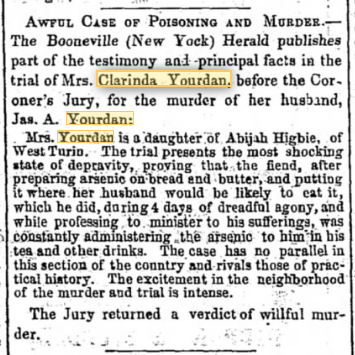
Following my uncle’s death, the doctor immediately informed the police of his suspicions that my uncle had been murdered, which led quickly to my aunt’s arrest. She was put in jail, though she did get to keep Eugenia with her as she was still being nursed.
My mother instilled in me the importance of independence, a challenging concept for women in the 19th century. Despite my young age when my aunt was imprisoned for murdering my uncle, I absorbed every detail of her story from her daily lectures. My mother meticulously kept a scrapbook of newspaper articles, carefully cutting and pasting them in chronological order to create a compelling narrative, though her side of the story was somewhat overlooked at the trial.
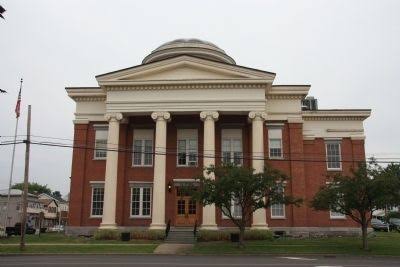
My uncle passed away in August 1857, but my aunt’s trial was over a year later in November 1858. My family stayed in Rome during the trial, but my mother wouldn’t let me join them, so I stayed with relatives and friends in West Turin. Aunt Clarinda attended every hearing, and the newspaper reported she didn’t seem to have suffered from her imprisonment, but she had a persistent cough and cold while awaiting her trial and was also nursing Eugenia. My grandfather, mother, and three of my cousins (Aunt Clarinda’s children) attended most of the sessions. The court struggled to find a jury due to some reluctance from various people, especially because it was a death sentence case, so they enlisted some of the spectators. My mother said many people, mostly women, came to watch. Many villagers testified that Aunt Clarinda had threatened Uncle James, including my aunt Jane, married to one of my mother’s older brothers, Jared.
At the trial, all of them, from the judges to the lawyers to the jury, were men. By the time my aunt went to trial, she had already been convicted in the court of public opinion. My grandfather hired three lawyers to defend my aunt: Ward Hunt was the chief defense attorney. My mother wanted to see the lawyer reveal how badly Aunt Clarinda was treated by Uncle James, but that never came out in the court testimony.
The District Attorney called the case “a deliberate and purposeful act that stands out in criminal history.” He emphasized the aggravating crime of murder by poison, especially when the fatal drug is administered by a wife to a husband; the wife, the lawyer said, was supposed to give comfort.
Perhaps one of the most confusing parts of my aunt’s story is the deed to the house which my grandfather gave to them as a wedding present. Because my aunt’s name was on the deed, she thought that her husband could not sell it without her permission. But she was wrong: the property belonged solely to my uncle. That was the law in New York State in the 1850’s. As well, my uncle had sold the house to a neighbour (although the neighbour had not yet received the actual document) because he was determined to leave and “go west.” He expected my aunt and the children to go with him.
One letter my mother sent shortly before my aunt killed my uncle became a problem. Authorities found the letter in my aunt’s possession after my uncle’s death and suspected my mother was involved in a plot to murder my uncle. The defence repeatedly denied my mother’s involvement and did not even want the letter submitted to the court, but the prosecution included the letter in the record.
Here is my mother’s letter to my aunt:
Dear Sister,
I take this opportunity to write a few words to you. We are all well now, although I have been very sick.
Clarinda, I want to say something to you about what you wrote. I have received both your letters without Baker [my father] seeing them. I was down in the village when I got them. I bought twenty-five cents’ worth of opium, but I could not get any arsenic.
And now, Clarinda, I think you had better trust in the Lord for help, for I should not like to do as you say about the contract. I know I should get found out, and then there would be a dreadful fuss. And, Clarinda, that would not make any difference, for he could get another, so Baker says. I asked him if Jim could, and he said he could, because he can prove that he had such a contract. And if he disposes of the place there will be some way provided for you. He cannot give a deed of the place to anyone without your name to it. And now you look out that you do not sign it, for if you do he will have you put right, sister.
Tell me how he treats you, and how he acts, and how he talks about us. And have you got my letter that I wrote, sister? I do not think you can get anyone to take away any of the things unless they are a —. And now I tell you not to take anything yourself to put an end to you, for that would be very bad.
Clarinda, now [we can] fetch you and the children. I can talk better than I can write, sister. I have some of your money, and whenever you want it we will get it for you. I lost some of my money out of my drawer, and I did not know how, but yours might go too.
Write as soon as you get this, and burn this.
Good-bye, Clarinda.
From Sarah Brand.
The testimony about my mother’s letter aimed to prove its authenticity and potential significance to the prosecution. The prosecution attempted to link my mother’s opium purchase to the package sent to my aunt, but the defence objected, and the court excluded that evidence. The coroner testified that during the inquest, he received a letter and a small package, and he gave the letter to the district attorney (this would be the letter mentioned above). The package contained small papers with substances resembling salts and opium. This testimony established the authenticity of my mother’s letter and the existence of the opium-like package, which the prosecution used to suggest that there was suspicious communication between my mother and my aunt.
What was never discussed, and which angered my mother, were the things in the letter which indicated perhaps other concerns: “Tell me how he treats you, and how he acts, and how he talks about us” shows that my mother was convinced that Uncle James was not easy to live with. Later, she says “And now I tell you not to take anything yourself to put an end to you, for that would be very bad.” My mother worried that her sister was suicidal.
So the prosecution wanted this letter in evidence, and there was much debate about it between the lawyers. Because there was no evidence to suggest that my mother had assisted my aunt, the court finally decided to ignore it; however, they still allowed it to be submitted as “evidence.” During the defense’s presentation, my aunt’s attorney asked the court to exclude the letter, arguing it was delivered unopened the Sunday before the death and couldn’t be linked to the alleged poisoning on the previous Thursday. In the end, my mother was exonerated by the court, but not necessarily by public opinion.
Other testimony mentioned the bitter conflict between my aunt and uncle over the children. While these witness accounts seemed accurate, they failed to capture the terrible trap my aunt felt: an unhappy marriage, a desire for divorce, and a desire to keep her children. She simply wanted to be left alone to raise her children; she wanted no more pregnancies.
After my aunt returned to my uncle, many people noticed her and testified about what they saw. Most of her neighbours certainly knew that she was unhappy. I think, by the time she murdered my uncle, she was no longer completely sane.
Much of the testimony at the trial was medical and technical. My uncle’s stomach was examined and large amounts of arsenic were found in it. At the trial, as well, the admissibility of Aunt Clarinda’s alleged confession was debated. She had admitted to the coroner when he came to get the body that she had given him arsenic. Her defence attorney argued that it was an illegal confession, given under much duress, and should be excluded, but the district attorney and two of the three judges felt the confession should be admitted, and so it was.
My mother and my grandparents testified at the trial, trying to prove that her separation from James was brief, that any earlier marital issues were resolved, and that she had a valid reason for obtaining poison. My mother testified that she had exchanged private letters with Aunt Clarinda before James’s death, sent her a child’s dress and opium for her baby, and explained that references in her letter concerned family matters, land, money, and Clarinda’s desire to stay nearby. She also admitted that she and her sister had discussed pregnancy, opium, and even arsenic in connection with preventing another pregnancy.
My grandfather, Abijah Higby, and my grandmother, Tryphena Higby, both testified that when Aunt Clarinda separated from Uncle James in 1856, she returned to live with them. They claimed she was only briefly in Forestport and later returned to James after their differences were resolved. Abijah said he knew of no further trouble after the reconciliation. My father, Baker Brand, supported this by saying her stay in Forestport was only about ten days, attempting to counter the claim that she had run off with another man for an extended period.
After hearing the arguments from both sides of the case, the jury deliberated for about half an hour before returning to court late in the evening at nine o’clock. They found my aunt guilty but recommended life imprisonment. The sentence was suspended until the next court term.
Shortly after my aunt’s conviction there were those who felt that she had not received a fair trial. It had to do with the fact that there were three judges and one of them was not always present for jury selection. Based on that, they decided in April 1859 to give my aunt a new trial which finally occurred in October 1859. Aunt Clarinda pleaded guilty to manslaughter in the first degree and was sentenced to life in Sing Sing. She had previously pleaded not guilty but withdrew her plea and pleaded guilty a few days before the trial.
My mother’s chilling news that my Aunt Clarinda had been convicted of murder and sentenced to life in Sing Sing Prison for Women left an indelible mark on my mother and on me. Tragically, my aunt passed away sometime in 1860, probably in the second half of the year and less than a year after she entered the prison, succumbing to infections and possibly a broken heart due to the prison’s appalling conditions.
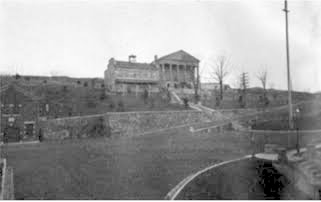
Inmates faced poor food, inadequate housing, and disease-ridden facilities, all under harsh rules that damaged their mental health. By 1860, the prison’s expansion and overcrowding worsened, facilitating the spread of infectious disease. Dr. W.N. Belcher, the prison physician for Sing Sing, noted in his report that the prisoners were generally unwell, with major health problems like influenza outbreaks, severe colds, and a three-month-long dysentery epidemic during winter. The three most likely conditions that my aunt might have had are: dysentery, a contagious disease caused by contaminated food and water; influenza or respiratory illness which could progress to pneumonia; or, tuberculosis, which was endemic in most prisons and made worse by the overcrowding.
My grandmother, Tryphena Higby, was deeply affected by my aunt’s difficulties and died six years later. My grandfather remarried but died in 1871, just 11 years after Aunt Clarinda. Clarinda’s children — Linda, Almeda, Andrew, Benjamin, and Eugenia — were cared for by my grandparents, who struggled to find a place for them in the world. The gossip in West Turin about my aunt and her children — and also about my mother and whether or not she was involved — was everywhere, making it hard for all of us, but particularly difficult for Aunt Clarinda’s children. Both boys left New York and married, having families. The three girls lived quietly and disappeared from view even within their family. In short, we heard little about what they were doing and how their lives were progressing.
We also don’t know where my aunt is buried. A prison cemetery for the homeless closed down, and bodies were moved. My grandparents knew Clarinda’s whereabouts but never told my mother. Years ago, I’d see my mother cry alone and ask her why. She’d say it hurt so much to not know where her sister was buried.
My aunt’s situation was told to me over and over by my mother. She urged me to find a way to be independent and to not, in any way, be beholden to a man. I learned that lesson well and it was directly responsible for the life I chose.